Showing posts with label The Great River Road. Show all posts

Friday, April 3, 2020

National Mississippi River Museum and Aquarium: Mihir’s Memoir

If you have been reading my articles, than Mississippi river’s enchantment on me is no secret. I had mentioned before about the Great River Road, a scenic byway that passes through ten states on both sides of the Mississippi River (https://experiencemississippiriver.com/). When I traveled through the Great River Road, I experienced Mississippi culture: ancient, old and new, river wildlife, natural beauty, fish, art, influence, history and unique geographical landscaped. All these come together at the National Mississippi River Museum and Aquarium. I have not been to any other museum dedicated to a river and its system. The museum was comprehensive. However, it primarily described the upper Mississippi River valley.
“Let us permit the nature to have her way: she understands her way better than we do.” A quote by Michel Eyquem de Montaigne was one of many in the museum. The museum had 37 permanent exhibits.  The first set of exhibits had many such quotes sprinkled all over. One thing that touched me emotionally was all those quotes and what different explorers, authors, leaders, and visitors felt about the Mississippi river. I urge you read Mark Twain after visiting this museum and you will realize why he fell in love with the mighty Mississippi. Read my favorite quotes from the museum on my blog: http://mihirjaiswal.blogspot.com/2020/03/river-quotes-from-national-mississippi.html.
Dubuque was a unique location for the museum. Most of the residential area in Dubuque was on cliffs with picturesque views of the river. Airbnb I stayed in had a spectacular view of the river from the windows of my room. The museum was on the banks of the river spanned over two large buildings and an outdoor area. Unlike other obscure museums I have been to, the National Mississippi River Museum and Aquarium was bustling with people.
The highlight for me was exhibits describing different features of a river and specifying how those features look on the mighty Mississippi. Flood table and erosion table let me run simulations of different flood and erosion events and their effects on riverbeds. In addition, planks surrounding the board explained Mississippi’s flood and erosion plains, and how human activities and environmental factors affected them over the years. Bayou and backwater marsh were even more interesting. They had alligators and turtles, which frequent bayous and marshlands. Backwater marshlands, a type of wetlands, have been seriously decreasing in area due to urban development posing a serious risk of flood, erosion, and pollution. Main channel, down in delta and Gulf of Mexico aquarium exhibits highlighted different aquatic wildlife habitats of the Mississippi. Flooded forest and the otter habitat dived deeper into diverse wildlife.
As I entered the museum, a large river map of the United States greeted me on the left wall, while a floor map of the Mississippi river guided through the landmarks of the river. A cool screen with a dial enabled me to travel from headwaters to the mouth. I could rotate the dial to adjust the speed of my travel, point of view being a low flying aircraft. I was hooked to the museum after that very first exhibit. River alterations exhibit explained different types of alterations, most common being dams as well as their positive and detrimental effects on the river. The museum also had first people exhibition outlining ancient civilizations of Mississippian culture. On the other side, several stories of explorers shed light on old and modern history.
In addition, it had a blacksmith shop, an exhibit on boat engine making, a harbor, a theater describing journey on the river, a boat shop, a boat launch, a sand and gravel barge, a conservation lab, national rivers hall of fame, a space wall and many more exhibits. Rivers and Roads exhibit described importance of river as transportation especially before big highways and air travel. The National Mississippi River Museum and Aquarium was comprehensive covering every bit of river soul in it.
Visit Dubuque for this amazing experience. Mississippi river banks have history, nature, serene landscape and culture in areas surrounding Dubuque. Iowa does not come up in conversation often, but you will bring it to the conversation more after your visit Dubuque and surrounding areas. Here is the website to explore some parts of the museum virtually during the social distancing: https://www.rivermuseum.com/all-exhibits. Next week I will describe my visit to the Boeing factory in Seattle.

Friday, October 26, 2018

Mississippi Head Water: In Five Pics

Mississippi river: What is the best part of it? The culture, the serene beauty, the history, the music, the food, the water, the legends. Answer: All of them. The Great River Road runs from Mississippi head waters in northern Minnesota all the way to its mouth in Louisiana. The best part: You can drive through it. I know because I did it. I started from Louisianan and drove all the way up to Minnesota. An experience everyone should take. While, I am posting many posts about the great river, this post is mainly about serene calmness of its headwaters in Itasca State Park. The legends and search for Mississippi headwaters are known. Enjoy the humble start of the mighty river.


Sunday, October 14, 2018

National Tom Sawyer Days: In Five Pics

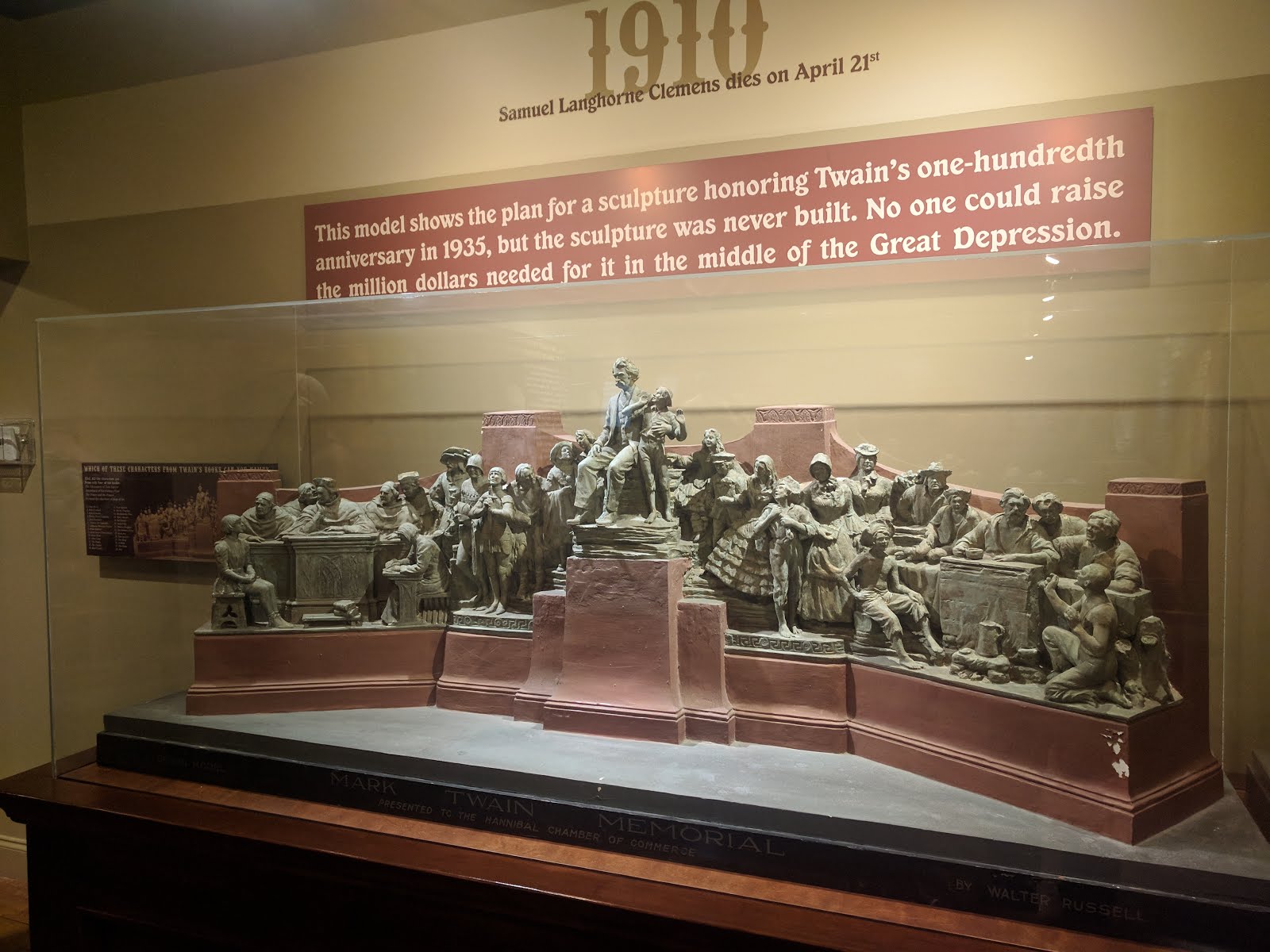
The word Hannibal evokes mixed emotions: A brilliant psychological thriller movie based on the violent novel by Thomas Harris, a recent TV series (I have not seen is, but highly acclaimed), and Mark Twain's hometown on the banks of Mississippi river. During my recent trip on the Great River Road, a must-visit was Hannibal. Little did I know, my visit coincided with the National Tom Sawyer Days, two and a half weeks long festival celebrating the most famous work of Mark Twain. The day I visited had fence painting competition (Genius! Whoever thought of the idea!), a mud volleyball competition, carnival, happy hour (Where everyone was invited!), and arts and crafts. These all in addition to Mark Twain's museum, his boyhood home, and many other homes from his childhood. The museum has sections of his books, its narration, movie clips and his inspirations behind some of the characters: one of the most memorable museums I have ever visited. The town was a living legacy of Mark Twain. They have been celebrating National Tom Sawyer Days from June 20th to July 7th for sixty years. (Wow!) Below are some pics from the town and the festival. Do not miss the video of the fence painting competition. The kids in the competition were dressed as Tom Sawyer. Enjoy other highlights from the Great River Road. The life is not enough to explore the Mississippi.


Tuesday, March 27, 2018

Cahokia Mounds: A Mirror into Doomsday


Humankind since invent of the TV has dreamed up and glorified many ways to end the world: Aliens, Comet, Dinosaurs, Earthquakes, Virus, Zombies, Robots, and many more. Could it be simpler than that? A change in culture is enough to bring about the downfall, as might have been the case of the Mississippian civilization.
Past couple of years, I traveled to many small towns in the USA. I met with different native people, who are all classified under a bucket, Native Americans, formerly known as Indians. As I explored more history, I quickly realized that many different cultures and tribes existed and still exists in the USA. One common amongst all of them was the conflict with European settlers, which led to their downfall. However, Cahokia Mounds is an exception.
A map of Mississippian culture civilizations

Last labor day, I visited Effigy mounds in Iowa. Different native people living in on the banks of Mississippi river used to make mounds, in variety of shapes and sizes. Many theories exist of their purpose: each as likely as the other. When urban expansion hit Midwest, several thousands of the mounds were destroyed to make room for modern cities and towns. Some of them preserved and protected, like effigy mounds. I will probably write a separate account of effigy mounds.


My second visit to the Mississippian civilization in Cahokia, Illinois near St. Louis was more exciting. Cahokia had a central mound, 200 ft high, like a pyramid, probably for religious ceremonies. It had a solar calendar with known as Woodhenge, multiple wooden poles in three different size circles. It was a walled village with stockade. According to an estimate, Cahokia was larger than London in 1200 A.D. Archeologists have discovered 104 mounds at the 2000 square feet site, in addition to many artifacts of daily life.

Today, Cahokia mounds site has many well-marked trails. Most of the mounds are covered in vegetation. Turkeys, dears and other wildlife frequent the area. I visited during the coldest day of the winter, so visitors were limited in numbers. A museum inside the visitor center shed some light on the culture, weather, location and history of Cahokia as well as its relationship to other Mississippian civilizations at the time.

Archeologists could not find enough evidences to determine the possible reason for downfall of a prosperous civilization. The possibilities were war, natural disaster, failure of leadership, and cultural changes. War and natural disasters seemed unlikely as 104 mounds stood intact. Failure of leadership could have driven away people. Most likely reason was the cultural changes. What does that mean?

The land was very fertile where Cahokia was. The citizens mastered the art of farming. They soon were growing more food than they needed. As a result, some citizens diversified into tool making, performing, advising and other professions. Over the time, more and more people moved away from the basic task of growing food. Probably, they ran out of farmers and food leading to downfall of the city. The situation is quite similar. The world is full of non-farming people like me, who are wasting time in regulation, politics or laziness. Aliens and robots are far reality. Our doomsday is scripted by us by ignoring our basic needs.
A survey of possible downfall reasons of Cahokia

Visit Cahokia Mounds, largest archeological site in the USA: https://cahokiamounds.org

Friday, October 6, 2017

Lakes of Minneapolis: In five pics

Minneapolis: A city that pleasantly surprised me the most in USA. It was a huge city and each part of the city felt like a city in itself with its own flavor. In addition, public transport was amazing. The city had a big mall, the Mississippi river, rich history, lots of lakes, and a hipster downtown. This post is about its chain of lakes. Western Minneapolis has a chain of lakes. I chose the Lake Calhoun for a hike. It was a beautiful Sunday morning, so a lot of people. People were playing volleyball, barbecuing, having picnics, fishing, swimming, paddle boating, sail boating, sunbathing, walking, running, talking and everything in between. Living for two years in DC, I was used to seeing only stress and smugness on people's face. It was amazingly refreshing not to see that on anyone's face. Every citizen was having real fun there. I sat down at benches, I observed birds, I observed people, I admired reflections and spent a wonderful morning there. Enjoy my experience in five pics. I hope you visit Minneapolis some day.